Recently for Discovering Diamonds, we received a traditionally published novel written by a very high-profile (male) author for review that did not go down well with one of our reviewers because of that 'little' matter of sexism - a topic which is of great importance, and of heated debate. Women are starting to speak out about it, certain men continue to dismiss/deny it. But does sexism matter when it comes to fiction? Particularly historical Fiction?
Were we right on #DDRevs to reject the book? Perhaps we should have posted our thoughts rather than keep schtum... which rather defeats the object of women finding the courage to speak out against sexism... but the review team at DDRevs are not in the business of trashing author's novels - a fair 2 or 3* review of a traditionally published author's poor attempt at writing historical fiction, highlighting incorrect historical facts etc., for instance and suggesting he/she sticks with their more familiar genre, is different to outright pulling a novel to pieces and awarding 1*.
I was still uncertain; should I have allowed the review to be posted? On the other hand Discovering Diamonds is perhaps not the place to 'make a point'... my own blog is another matter entirely, however. Here I write what I want to say (or what my friends/members of the DDRevs team want to say.)
So... Read On...
and, for those interested, I have added some extra, short, articles about women in history by Alison Morton, Annie Whitehead and Lucienne Boyce - women who know what they are talking about (alas, it seems, unlike some of the chaps!)
Helen

by Kristen McQuinn
What reader of historical fiction isn’t at least passingly familiar with the statement, “I know I have the body of a weak, feeble woman; but I have the heart and stomach of a king, and of a king of England too… ?” Queen Elizabeth’s 1588 speech to her troops at Tilbury is one of the most famous and recognizable of the Renaissance. It would be hard to imagine a modern female politician making a similar speech, though, and any man saying something about a feeble woman’s body would be (and should be) immediately excoriated. Reading historical fiction requires authors and readers alike to set aside modern mores and read with the understanding that times have changed, and be sensitive to the fact that none of us can judge another time period or culture by our own standards. But what happens when those standards get distorted? How do we tell the difference between historical accuracy and outright sexism? Does it even matter?
In a nutshell, yes. It matters a great deal because authors should avoid bias, while keeping authenticity in mind, avoiding unnecessary sexism, and bringing historical fiction into the global discussion of sexual abuse in a meaningful way.
In a nutshell, yes. It matters a great deal because authors should avoid bias, while keeping authenticity in mind, avoiding unnecessary sexism, and bringing historical fiction into the global discussion of sexual abuse in a meaningful way.
Authors have to be careful to check their own biases at the door when writing for a variety of reasons. Naturally, their readers will include at least a few who want as accurate a depiction of the time period as possible. That can be difficult to maintain if modern sensibilities are strongly present in a book set in, for example, Victorian England. It must be difficult for authors, products themselves of more enlightened times - see my own bias coming through - to write about women as second class citizens who are not as intelligent as, or even as human as, their male counterparts. How difficult must it be to write about women as the Angel in the House if she is good, or hysterical and subhuman if she is not good. This raises the question of what makes her good? Is the character a murderer? Or does she simply have a mind of her own and isn’t afraid to voice her opinion? Is the period Ancient Roman, Medieval, Renaissance, Victorian? How would women, feisty or otherwise, typically behave in these time periods? It may be tempting to write a woman who flagrantly tells men off, disregards the dictates of her social class, or makes her own choices rather than obeying her father, but she likely wouldn’t have really done that. It probably never occurred to her that she even could do something like that in the first place, and her capacity for actually carrying it out would depend on a variety of issues.
On the flip side, writing male characters has to come with a balance as well. Women may not have had the same rights modern women arguably have now. They may have been considered second-class citizens. Plenty of men throughout history (and now, too, tragically) were misogynists. Aristotle thought women should be “obedient as a slave,” proving that just because he was a philosopher doesn’t mean he wasn’t also a pig; Martin Luther thought women could either be wives or whores, so take your pick; Shakespeare seemed pretty disgusted by the female sex, based on his rants against them in King Lear; and even the enlightened Gautama Buddha apparently thought women were too stupid to understand Buddhism (Saṃyutta Nikāya 4). But there is evidence that many men still loved and respected the women in their lives. Refer to the real life love stories of couples like John of Gaunt and Katherine Swynford, Edward IV and Elizabeth Woodville, Abelard and Heloise, or even Geoffrey and Philippa Chaucer for examples. Writing men as misogynistic blowhards is a dangerous game for authors. If there is evidence to support the misogyny of an historical character, that’s one thing. But to write a character as such simply because he lived in a time when women were not seen as equal poses a number of risks.
There is also a question of authenticity. How accurate is a character’s attitude toward women if he proves himself to be sexist? Is he truly reflecting the attitudes of the time in which the book is set? How is the author determining this? Or is it really a reflection of the author’s own sexism, which is far more disturbing?
Recently, I read a traditionally published book by a well known author that was set in the 14th century. Naturally, I didn’t expect that women would be given the same rights as the men in the story. In keeping with medieval society, I anticipated that women would expect generally to be submissive to their fathers or husbands, stay home and tend to children and the house, and so forth, even if they are salty ladies who feel free to speak their minds. I did not, however, expect the rampant sexism that I found in the book. In just the first few pages, this particular novel made multiple references to women’s vacant eyes being a big turn-on. To whom? To the protagonist? Or to the author? Similarly, there were multiple juvenile references to sex, such as mattress pounding or hide-the-sausage, which seemed like something that would appeal to young boys rather than experienced, adult readers. The sheer volume of remarks in this vein makes it sound as though the author himself finds vapid, vacant-eyed women ready for some mattress galloping a turn-on rather than his revolting protagonist. Is this a fair evaluation of the author? Perhaps not. I’ve never met him. He may be a perfectly lovely man, but his writing, in this novel, makes me automatically wonder. This, in turn, makes me not want to know him, or his books, in the first place.
Another risk historically inaccurate sexism (what a strange thought!) in historical fiction poses to authors is already posed above: the loss of readers. This is the 21st century. As stated previously, experienced readers of historical fiction know how to leave modern customs and social mores behind when reading books set in different time periods. But we do still live in a time when women generally are treated as humans and movements such as #MeToo exist solely to amplify women’s voices. Of course, feminism didn’t exist in antiquity, in the Middle Ages, or in the Victorian Era. However, it exists now, and although readers today want authors to operate within the parameters of historical accuracy, they also expect authors to hold fast to acceptable attitudes towards women as much as possible.
Do readers have a responsibility anywhere in this? Of course. We, as readers, have to be willing to adjust our expectations appropriately. If I’m reading a medieval fiction and it’s not listed as historical fantasy, I expect the characters to behave within a certain set of parameters and for the major events of the period to be accurate. If I’m reading a book, for example, in a series called Lady Sherlock, I’m definitely not going to expect rigid adherence to Victorian social customs for each and every one of the characters. Though I must say, the novels in that series are more rigorously researched and accurate than the novels in some other series I’ve read which are touted as straight historical fiction. My expectations as a reader were confounded, as were just about every gender role known to humankind, which is a good thing. Using literature to address social issues and gender relations is one thing; using it as a way to be sexist and gross is an abuse of readers’ trust and, in the 21st century, simply unacceptable.
Sexism is an issue that needs to be addressed, and literature is an ideal place for the discussion. Making accurate historical fiction part of that discussion can play an important role in the larger, modern conversation taking place globally in places such as the #MeToo and Time’s Up movements. Don’t use your writing platform to amplify sexism. With well-researched and sensitive characters, historical fiction can provide meaningful, relevant contributions to a powerful topic. Be more than an author - use your voice to be an advocate and ally.
It is a difficult subject, but one that is starting to cause concern for many (female) readers who are beginning to voice that if it is not necessary for the plot, or to further develop a character or situation - then why is a scene of a derogatory or disturbing sexual nature there?
It is a difficult subject, but one that is starting to cause concern for many (female) readers who are beginning to voice that if it is not necessary for the plot, or to further develop a character or situation - then why is a scene of a derogatory or disturbing sexual nature there?
© Kristen McQuinn

It might seem that traditionally, the Church didn’t have a tremendously modern-thinking attitude to women, but in the early days of Christianity in England, many abbeys were run by women, some of whom notably educated men who then went on to become bishops.
Later on in the period, priests began to play more prominent roles, but the rights of women were enshrined in the law codes, which survive from the seventh century to the eleventh and clearly provide for widows and their children. Widows were not to be forced into nunneries, or to remarry against their will. There were strong penalties imposed for the crime of rape. True, there would be no need for these laws unless the crimes were actually being committed, but the women had rights, recognised by the law codes and perhaps in defiance of modern assumptions about the role and status of ‘Dark Ages’ women. A man seeking to marry a maiden had to make gifts - not to her father, but to the woman herself. She would decide whether or not to accept his suit. And these gifts were not mere trinkets, but gifts of land, which then belonged to her in her own right.
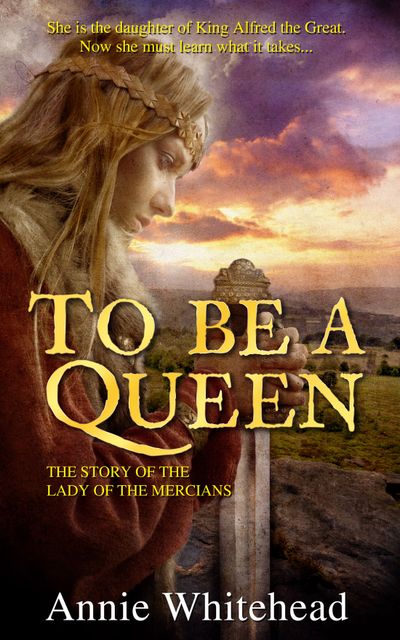
One of the most famous Anglo-Saxon women was Æthelflæd, Lady of the Mercians, daughter of Alfred the Great. Apart from a few exceptions about whom we know very little, she was the only ruler of an Anglo-Saxon kingdom. She was not called queen, but she behaved like one, leading her country in a time of strife, at the peak of the Viking incursions, and making strategic decisions normally left to noblemen and kings. Her countrymen were happy to follow her and it is often lamented that the chronicles hardly mention her or her activities. But I’ve long argued that this is largely due to the fact that her rule was not considered worthy of remark and that there may have been an element of gender-blindness. She was a ruler, a leader, and she played a prominent role in halting the Viking advances. It does seem that her sex was largely irrelevant to those living alongside her, and writing about her afterwards.
Queens frequently acted as regents for their infant sons, tending only to retire from political life when those sons married. Mothers of kings were highly revered and respected. True, some stories abounded in which high-ranking women were accused of murder and witchcraft, but scratch below the surface and you’ll find that inevitably these women are being accused by the Church chroniclers who have a vested interest in besmirching their reputations.
The law codes - promulgated by kings - and the charter witness lists tell us that women played prominent roles in politics, were powerful individuals, had rights enshrined by law, and were not considered in any way to be ‘second-class citizens’.
WOMEN IN ANCIENT ROME by Alison Morton

Inscriptions and epitaphs give us the names of women throughout the Roman Empire, but often tell us little else. However, vivid snapshots of daily life, especially of elite women, are preserved in letters, plays and poetry, particularly by Cicero, Catullus and Ovid; we see women in dining rooms and boudoirs, at sporting and theatrical events, shopping, putting on makeup, worrying about pregnancy, but of course through male eyes.
Roman women were full Roman citizens but lived in the private sphere. Legally under the guardianship of their father or husband, they were excluded from public office except as Vestal Virgins.
Everybody living in the domus, the family home, was subject to, and the responsibility of, the pater familias, the father of the family. In law, his authority did not extend to wives who were under their father’s guardianship, but in practice husbands ruled. But women often exerted very strong personal and political influence. Indeed, Livia was Augustus’s constant councillor, Antonia Minor ran the ruling Julio-Claudian family on her wealth and personality.
Unlike in other ancient cultures, Roman women retained the right to manage and dispose of the property they brought into their marriages; they enjoyed full inheritance rights on a par with their brothers. Husbands were expected to be the public face for their wives in legal cases, but women had the right to act on their own if they chose. Hortensia, for example, successfully led a protest in 42 BC against laws designed to tax Roman women, using that well-known argument of ‘no taxation without representation.’
Under emperor Augustus, the Leges Juliae of 18–17 BC attempted to elevate both
morals and numbers of the upper classes in Rome through financial inducements encouraging
them to marry and have children. Women who produced three children
were no longer obliged
to have a male guardian.
Marrying-age celibates and young widows who wouldn't remarry
were prohibited from receiving inheritances and from attending public games,
and adultery was established as a private and
public crime. You can imagine how well that worked, especially with the traditionally open Roman divorce
law. But it was only by the late fourth century that all widows (not divorcees) could be the legal guardians of their
children.
Marriage for most of the Roman
period was mostly an economic arrangement for the pragmatic Romans with the
participants often having little say in parents’ decisions. The double standard
of sexual behaviour ran throughout Roman times; divorce and remarriage were common
and relatively easy. Later Christian emperors were obliged to tighten the law
in order to reflect Christian ideals of the time. However, that must have been tricky, given the traditional attitude
to divorce.
Christianity also challenged
aristocratic marriage practice by forbidding marriages between relatives and by
making celibacy an acceptable option. This gave women the opportunity for the
single life which, apart from becoming a Vestal, hadn’t been available before.
Women were expected to dress
modestly, but were neither veiled nor secluded. Chris Wickham in The Inheritance of Rome says there is
plenty of evidence for female literacy and literary engagement not only among
the aristocracy. In Egypt, women have been recorded as buying and selling
property, renting out property, money-lending, operating as independent
artisans and shop-owners as well as practising medicine as midwives and more
broadly.
In recent fiction, Lindsey Davis
and Ruth Downie’s heroines live within the social frameworks of their time, but
they are not downtrodden or submissive. Both authors are meticulous in their
research but vivid in their characterisation. But personally, I wouldn’t care
to cross Helena Justina, Flavia Albia or Tilla the Briton. Carina and Aurelia
from Roma Nova are, of course, Romans of a different age…
HEART AND HEARTH: THE SUFFRAGETTE IN HISTORICAL FICTION
by Lucienne Boyce

What are your views? Do you mind reading about 'vacant-eyed' women and text that is scattered with schoolboy euphemisms?
Feel free to leave a


by Lucienne Boyce

 |
| www.lucienneboyce.com |
It’s
hard to imagine any attempt to portray the suffragettes as down-trodden, weak
and feeble women getting very far. The women who marched up to the House of
Commons to assert their right to political inclusion hardly lacked self-respect.
The women who delivered their message from hot air balloons, boats, cars and
bicycles hardly lacked ingenuity. The women who posted themselves to the Prime
Minister, or who hid for hours under platforms to bob up shouting “Votes for
Women” in the middle of some pompous politician’s speech, or who spent Census
Night 1911 in a cupboard in the House of Commons hardly lacked wit.
As
for courage, no one can deny their bravery in the face of police brutality; of stonings,
beatings and mobbings; of the dreadful terms of their imprisonment with its
hunger strikes and forcible feedings. The suffragettes were bold, determined
and daring.
You could say
that from this point of view historical fiction serves them well, albeit often with
a huge helping of cliché, with its procession of doughty window breakers, arsonettes
and hunger strikers. These women are subjects not objects, they are active not
passive. They make choices – sometimes wrong choices it is true, but choices
all the same.
But much of this
fiction also perpetuates stereotypes about women. In novel after novel, women’s
activism is placed in a narrow, domestic context. A woman turns to the
suffragette movement because she’s been let down by a man – seduced, divorced,
abandoned. Or she is about to lose her children, or she’s sexually harassed at
work, or she can’t provide for her family. It usually follows that her
involvement in the suffrage campaign has a deleterious effect on her love life,
for of course her male lover cannot understand what’s got into her.
This is not to
say that these issues are not important. The personal is political, and it is
important to understand how social and economic conditions affect us as
individuals. This is often the sphere in which political awareness is born –
and fertile ground for a novelist of course. Fiction is rooted in character, and
so it is inevitable that its focus should be on the personal. But women are
rarely seen taking a wider interest in national or international politics.
Their grievances are depicted in purely personal and domestic terms. It was
this assumption that drove politics after women got the vote, with politicians appealing
to the new female electorate by focusing on issues like the cost of food or
child care provision. Women were – and still are – expected to be interested in
social and welfare issues, less so in defence, foreign policy or taxation.
Perhaps that’s because
it would be impossible to make such an exciting story out of what appear to be
more mundane issues. After all, who could imagine being gripped by a novel
about the 1902 Education Act, the 1909 Budget, or the Welsh Church Act 1914? (As
a matter of fact, I could – but that’s another matter…) But a story involving female
characters who are not wholly preoccupied by domesticity and romantic relationships
would at least disrupt the stereotype that confines women to heart and hearth. So
perhaps the next person who writes a historical novel about the suffragettes
might consider moving away from the tired old tropes and broadening the scope
of their female characters’ horizons a little!
© Lucienne Boyce
January 2019
 |
| www.lucienneboyce.com |
What are your views? Do you mind reading about 'vacant-eyed' women and text that is scattered with schoolboy euphemisms?
Feel free to leave a