
My Tuesday Talk Guest: Elaine Cougler

When
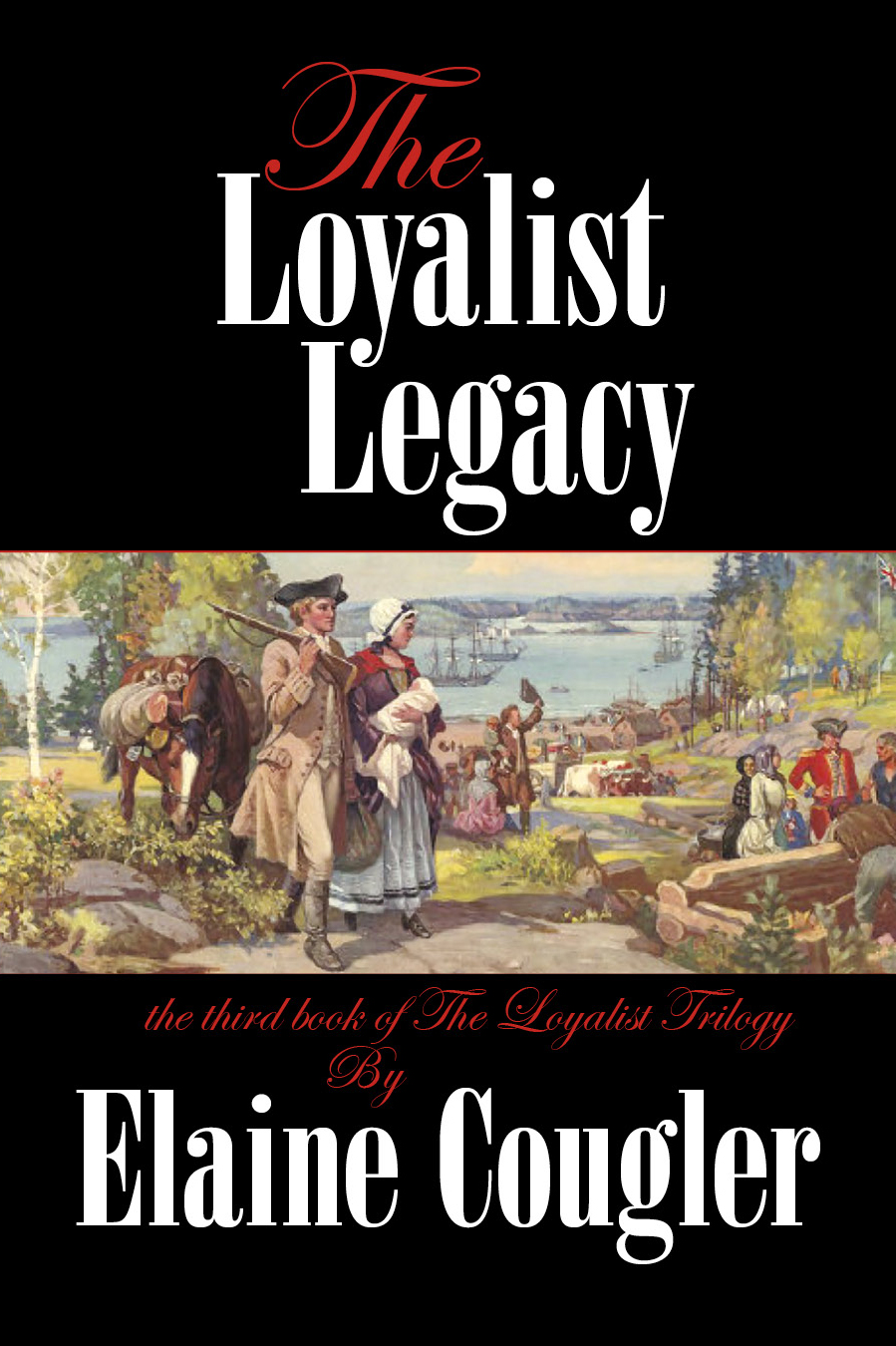
the War of 1812 is finally over William and Catherine Garner flee the
desolation of Niagara and find in the wild heart of Upper Canada their two
hundred acres straddling the Thames River. On this valuable land, dense
forests, wild beasts, disgruntled Natives, and pesky neighbors daily challenge
them. The political atmosphere laced with greed and corruption threatens to
undermine all of the new settlers’ hopes and plans. William cannot take his
family back to Niagara, but he longs to check on his parents from whom he has
heard nothing for two years. Leaving Catherine and the children, he hurries
along the Governor’s Road toward the turn-off to Fort Erie, hoping to return in
time for spring planting.


* * * * * * * * * ** * * * * * * * * *
With
realistic insights into the challenging lives of Ontario’s early settlers,
Elaine Cougler once again draws readers into the Loyalists’ struggles to build
homes, roads, and relationships, and their growing dissension as they move ever
closer to another war. The Loyalist
Legacy shows us the trials faced by ordinary people who conquer
unbelievable hardships and become extraordinary in the process.
“We Want a
Say!”
Ordinary People Fight the Family Compact
One of the interesting things about writing
historical fiction is the exquisite chance for an author to show attitudes,
events and mores of times gone by. Writing about my own country as it was
coming into being has allowed me to show how different our world was in the
days following the American Revolutionary War and the War of 1812.
Today we enjoy good relations with both our
American neighbours to the south and our mother country across the pond. This
state of affairs was not always so. Quite a lot of wrangling took place with
the Americans in both the Revolutionary War and the War of 1812 and families suffered
because of it.
Even the British government during the
times of which I write was not always fair to Loyalists and others under its
protection:
- Many of the Six Nations Indians fought bravely and boldly on the side of the British in the American Revolution only to lose great tracts of land when the British and the Americans finalized their treaty to end that war in 1783.
- Richard Beasley’s beautiful and well treed land overlooking Burlington Bay (at present-day Hamilton, Ontario) was seized by the British for its suitability as a troop and supplies depot; Beasley got back a denuded and desolate tract of land he soon lost entirely, because of the chicanery of those in power. You can see that land today where Dundern Castle sits, a tourist mecca built right over the redoubts and battlements on Beasley’s land.
- And after the War of 1812 the British system allowed the rise of a group of powerful men disdainfully called the “Family Compact” by those early settlers in Upper and Lower Canada (Ontario and Quebec). These men did as much as anyone to cause the pioneers to move toward democracy so that ordinary people could have a say in their own world.
In the excerpt from the third book of the
Loyalist trilogy below, the two Garner brothers are in York (Toronto) arguing
with Bishop Strachan, a powerful member of the “Family Compact."
“Now I remember where I heard your
names before. Your father is John Garner.”
“Yes.” The brothers answered
together.
A tiny smile crossed the bishop’s
face, thinning out his lips even more. “And you broke out of jail all those
years ago. With your father.”
William’s voice cut in. “We were all
wrongfully imprisoned. No charges were brought against any of us.” After a
moment he added, “sir.”
A large sense of foreboding in his
gut, Robert dared to speak again. “We had to escape. Our father was sick and
dying from being in that infernal jail.” He kept his voice low but inside his
heart was pounding as he remembered.
“Just one of the illegal acts
perpetrated by those in power. For their own ends.” William’s tone was soft. “I
ask you, is that any way to start a country?"
“You want me to listen to jail
breakers?”
“Who were illegally jailed!” Robert
could not abide the sneer on the man’s face.
Suddenly the bishop stood and leaned
over the desk right into their shocked faces. “Aha! Now I remember. You.” He
pointed his bony finger in Robert’s face. “You’re illegal. You blasted
American!” The man ranted all around the room, shouting and shrieking, so that
the door crashed open and the beady-eyed clerk came running in.
“Arrest this man!” The bishop
pointed at Robert. The clerk grabbed his arm and shouldered him past the
shocked William and out of the room.
Excerpt from The Loyalist Legacy
Excerpt from The Loyalist Legacy

“....absolutely fascinating….Cougler doesn't
hold back on the gritty realities of what a couple might have gone through at
this time, and gives a unique view of the Revolutionary War that many might
never have considered.”
Sharon’s
Garden of Book Reviews.
“....an
intriguing story”
A
Bookish Affair
“I
highly recommend this book for any student of history or anyone just looking
for a wonderful story.”
Book Lovers Paradise
“Elaine’s
storytelling is brave and bold.”
Oh, for the Hook of a
Book
Oh, for the Hook of a Book
ABOUT ELAINE
Elaine Cougler is the author of historical novels about the lives of settlers in the Thirteen Colonies who remained loyal to Britain during the American Revolution.
Cougler uses the backdrop of the conflict for page-turning fictional tales where the main characters face torn loyalties, danger and personal conflicts. Her Loyalist trilogy: The Loyalist’s Wife, The Loyalist’s Luck and The Loyalist Legacy coming in 2016.
The Inspire! Toronto International Book Fair selected The Loyalist’s Wife as a finalist in its Self-Publishing Awards. The Middlesex County Library selected the book as its choice for book club suggestions. The Writers Community of Durham Region presented Elaine with a Pay-It-Forward Award.
Elaine has led several writing workshops and has been called on to speak about the Loyalists to many groups. She writes the blog, On Becoming a Wordsmith, about the journey to publication and beyond. She lives in Woodstock with her husband. They have two grown children.
Links:

Book Tour
November 7 Hook of a Book Review of The Loyalist Legacy
November 8 Let us Talk of Many Things… Guest Post
November 9 Meyette’s Musings Interview
November 10 The Book Trail Review of The Loyalist Legacy
November 11 Writer’s Treasure Chest Guest Post
November 14 Kristina Stanley Guest Post
November 15 P.C. Zick Guest Post
November 16 Cryssa Bazos Interview
November 17 A Writer of History Guest Post
November 18 Charlene Jones Soul Sciences site Podcast Interview
November 21 Writer’s Treasure Chest Guest Post
November 22 Hook of a Book Interview (live or taped)
November 23 Annika Perry’s Writing Blog Book Release Post with excerpt
November 24 Sally Moore’s Blog Interview
November 25 Black Friday sale of The Loyalist Legacy on Amazon (link to come)
* * * * * * * * * ** * * * * * * * * *
Chill With A Book Award
by Pauline Barclay
by Pauline Barclay

September saw the launch of a brand new award, Chill with a
Book AWARD.
The Award is exclusively for indie authors and authors with
small indie publishers. It is designed to promote the best books from indie
authors.
Indie authors write some of the best reads in out the market
place, but due to a number of constraints their work is not always as visible
as authors published with large publishing houses, yet many of these authors deserve
as much, if not more, recognition.
For those who know me, understand I am very passionate about
supporting indie authors, I am one myself and know from personal experience how
tough it is to gain recognition and a large following whilst sitting down and
writing the next novel, and that is why I have created Chill with a Book AWARD
.
I want Chill with a Book AWARD, not only to gain a
reputation for recognising great reads, but for authors to feel proud to
receive the accolade. However, the AWARD is not for everyone, it will only be
honoured to the best.
How the process works:
Once a title has been accepted for consideration it will be
read by a number of Chill’s readers and checked against the following criteria…
Were the characters strong and engaging?
Was the book well written?
Did the plot have you turning the page to find out what
happened next?
Was the ending satisfying?
Have you told your friends about it?
Readers have clear instructions on how to arrive at their
evaluation.
Authors must understand that a book accepted for consideration
for a Chill with a Book AWARD does not guarantee it will receive the AWARD.
Authors of books accepted for consideration will be notified
directly whatever the final decision.
Awarded books will be promoted on Chill with a Book’s web
site, Chill's Pinterest board, Chill's Facebook page and Twitter
A small fee of £16 is charged for each book accepted for consideration
payable via Paypal (the fee is for the purchase of Kindle copies for readers
and any balance left used to maintain Chill’s web site)
There are limited places each month for books to be
considered and if you are interested in submitting your title, please email Pauline at paulinechill@hotmail.com in the first
instance.
Chill with a Book’s decisions to accept or reject a book for
consideration is final.
Chill with a Book's decision to award a book or not is
final.
It is an exciting time for Chill with a Book and indie
authors and I look forward to seeing great, well written reads sporting the coveted
Chill with a Book AWARD button on every book shelf.
For more about Pauline and Chill with a Book AWARD click on
the following links:


