England. 1685
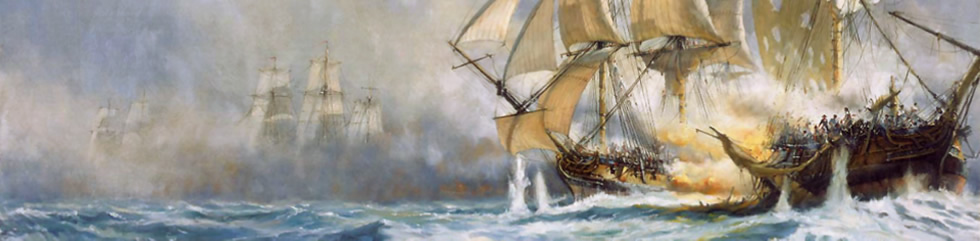
A group of men, unsure whether Catholic James, brother of protestant Charles II was going to be a poor king (he was) decided to go off and seek their fortune, although they knew next-to-nothing about sailing. They didn’t bother getting an official letter of marque either, but these were minor details when you were young and up for a Grand Adventure.
 |
| William Dampier |
They purchased the Revenge, hired its previous owner, Captain John Cooke, and sailed off to the Caribbean in search of fame, fortune and a ship’s surgeon. They found Dr Lionel Wafer in Panama. He had been with Cooke’s pirate fleet in 1679, and along with him they found John Hingson who was also welcomed aboard Revenge. These two knew of another potential colleague, William Dampier, who from April 1683 was keeping out of the way (after some illicit pirate shenanigans) in Elizabeth City, Virginia, (which became known as Hampton in 1706).
Dampier was an experienced sailor, and a remarkable man: four years previously he had circumnavigated the world – a feat he was to achieve three times. He was the first Englishman to explore what turned out to be, in later years, Australia, and his drawings and notes that he made on the Galapagos Islands inspired another naturalist a century later. Charles Darwin.
Born in Somerset sometime before 5th September 1651, recorded as the day he was baptised, he received a solid education at King's School, Bruton, then sailed as a merchant seaman to Newfoundland and Java before joining the Royal Navy in 1673. Falling ill, however, he returned to England to recuperate. With his health restored, and in desperate need of money and employment he hired himself out for indentured service managing a Jamaican plantation and then logging in Mexico. That not working out very well he joined pirate buccaneer, Bartholomew Sharp, raiding in the Spanish Main, leading to his first circumnavigation voyage where the crew attacked Spanish ships in the Pacific and settlements in Peru before returning to the Caribbean, with William heading for Virginia.
The Revenge sailed on 23rd August heading for Africa, and an upgrade of ship - a suitable Danish vessel which they renamed Bachelor's Delight (sometimes spelt Batchelor's Delight) and set sail for the Pacific Ocean. Spanish treasure mined from the South American interior beckoned – the only way to take it home to Spain was by merchant ship to Panama, and then by Galleon to Spain. Few ships or crews were experienced enough to sail around the Horn, so the Spanish assumed that their enterprise was a safe gamble. They reckoned without the Bachelor’s Delight crew. For several years they plundered their way from Chile to California, hiding from the Spanish between the numerous Pacific Islands – including the Galapagos. It was Dampier who drew the first charts of the islands and gave them their English names. The men were the first Europeans to see what became known as Easter Island – not rediscovered until 1772.
Thoroughly annoyed by these Englishmen, the Spanish gave chase, and the Bachelor’s Delight fled westward from Chile. The Spanish, gave up, but not knowing this, the English crew kept going. They were the first Westerners to see the east coast of New Zealand, although they named it Davisland after their captain. Realising their pursuers had gone, they returned towards South America, taking a more southerly course as a precaution.
Tiring of the escapades, Dampier transferred in March 1686 to Captain Charles Swan’s Cygnet as navigator. They sailed west across the Pacific on a voyage which became Damper’s second circumnavigation. Swan was abandoned on a beach in the Philippines, and in 1688 Dampier and another crew member were marooned in the Nicobar Islands between India and Malaysia – although prior to this in the January of that year Dampier’d had the chance to observe the fauna and flora and geographic terrain of Australia’s north coast.
 |
| Australian plant life from Dampier’s A Voyage to New Holland, published in 1703. |
Unperturbed by the prospect of being marooned, they made a dugout canoe and sailed with great hardship until rescued near Sumatra by a merchant heading for England. Returning to England in 1691, rounding the Cape of Good Hope, Dampier was deep in poverty but he had his precious journals intact, along with a tattooed slave, Prince Jeoly, whom he exhibited for profit in London.
Dampier, while making money from displaying his slave, was having his book A New Voyage Round the World made ready for publication, which came about in 1697 and became an immediate sensation, including at the Admiralty in Greenwich. In 1699 Dampier was offered the command of the warship HMS Roebuck in order to explore the east coast of t New Holland – Australia. The expedition was a partial success, with Dampier achieving his aim of making many notes and charting the currents and wind patterns of the southern oceans, but the ship was in poor condition and eventually foundered at Ascension Island in February 1701. Many of Dampier’s papers were lost in the wreck, but as many were salvaged and although he and the crew were marooned for more than five weeks they were rescued by an East Indiamen and returned to England in the summer of 1701.
The Roebuck was located in Clarence Bay, Ascension Island in 2001 by an Australian team of divers.
Dampier’s records of the expedition was published as A Voyage to New Holland in 1703, but he had been court-martialled upon return to London on a charge of cruelty. On the outward voyage he had removed Lieutenant George Fisher from office and had him jailed in Brazil. Managing to get back to England, Fisher had complained to the Admiralty about his unacceptable treatment. Dampier was deemed guilty, dismissed from the Navy and had his pay for the voyage confiscated. You can’t help but wonder if it was a put-up job to save making payment can you?
Privateering had broken out again in 1701 along with the War of the Spanish Succession. On 11th September 1703, Dampier sailed from Ireland as commander of St George, with 120 men as crew, and accompanied by the Cinque Ports crewed by sixty-three men. Rounding a stormy Cape Horn, and while refilling their water supply in February 1704 at the Juan Fernández Islands off the Chile coast, they spotted a French merchantman. The subsequent seven-hour battle failed. They had more success with capturing several Spanish ships near the Peruvian coast, although they did not relieve these Prizes of all their plunder as Dampier had a mind to attack the town of Santa Maria on the Gulf of Panama where, supposedly, a grand haul of Spanish treasure was stockpiled. They attacked, but the town was so heavily defended Dampier ordered a withdrawal. Consequently, in May 1704 the Cinque Ports and St George parted company. One of the officers, Alexander Selkirk complained about the seaworthiness of the Cinque Ports demanded to be set ashore. He was right about the ship: she sank. but he was to be marooned for four years. We know of him today because of Daniel Defoe who wrote a story based on Selkirk. He called it Robinson Crusoe.
Dampier decided to attack the main object of the voyage, the Manila treasure galleon, the Nuestra Señora del Rosario. Caught unprepared she did not run out her guns, but Dampier and the officers wasted so much time in debating the most effective way to attack that the Spanish got their act together, loaded, run out, and inflicted such ferocious damage on the St George the whole idea had to be abandoned and that was the end of the expedition. Many of the crew transferred to other ships, and Dampier had to abandon the cannon and worm-damaged ship off the coast of Peru where they were thrown into prison by supposed Dutch allies as pirates. Later released, but without a ship, Dampier made his slow way back to England reaching there at the end of 1707.
He was a brilliant navigator, naturalist and explorer, but a lousy commander and an even worse pirate!
Another chance to redeem himself came in 1708 when he went aboard a privateer, Duke, as Sailing Master. In consort with Duchess, commanded by Woodes Rogers, he was once again to sail to the Pacific with the intention of harassing the Spanish. The voyage was highly successful, amassing a total of just under £148,000 – which would be something in the region of a Lottery Rollover win today: nearly £21million, much of it being taken from the Nuestra Señora de la Encarnación y Desengaño in December 1709.
In January 1710 Duke and Duchess crossed the Pacific, remaining at Cape Town and the Cape of Good Hope for more than three months awaiting a suitable convoy escort, finally dropping anchor in the Thames on 14th October 1711.
Here the story ends. Dampier did not live long enough to receive any of his share of the wealth from Woodes Rogers’ expedition. Dampier had married, but he scarcely mentioned his wife in his otherwise prolifically written journals, so we know next to nothing about her, but Without Dampier's books and notes, Darwin would not have had the inspiration to travel to the Galapagos Islands to explore his theory of evolution. Without Dampier, James Cook would not have had his extensive contribution of charts for tides, current and winds across all the oceans. Jonathan Swift included Dampier in his novel Gulliver’s Travels. Dampier’s mention of breadfruits led to the ill-fated voyage of the Bounty. One of Dampier’s crew, Simon Hatley, reputedly shot an albatross off Cape Horn, an incident which inspired Samuel Taylor Coleridge to write his epic poem, The Rime of the Ancient Mariner.
To Dampier falls the responsibility of using various words in print for the first time: barbecue, avocado, chopsticks and sub-species to name but a few of the eighty or so words cited in the Oxford dictionary. Several places in Australia are named after him and in 2015 a minor planet was given his name, 14876 Dampier. All that because of William Dampier.
Alas, he died in poverty, although the reason for his death and the exact date is unknown. He was found to be heavily in debt and was probably buried in an unmarked pauper’s grave, the whereabouts of which is also unknown. A sad end to a most remarkable man.
 |
| Engraving of Dampier's encounter with a storm off Aceh, in modern-day Indonesia, by Caspar Luyken. |
Dampier published the following books:
A New Voyage Round the World (1697)
Voyages and Descriptions (1699)
A Voyage to New Holland (1703)
A Supplement of the Voyage Round the World; A Discourse of Winds; The Campeachy Voyages (1705)
A Continuation of a Voyage to New Holland (1709)